
Therapy in Urdu, Hindi or English with an Urdu speaking therapist in New York
Looking for an Urdu speaking therapist in New York usually means you have tried to describe something painful in English and felt it go flat halfway through the sentence.
Language holds memory. The words your grandmother used to soothe you, the phrase that cut deepest during a family argument, the prayer you whisper when you are scared — those live in the language you first felt them in. Rubina offers therapy in Urdu, Hindi, Punjabi and English, so you can say what you mean in the words that actually carry it.
- LCSW
- CASAC-2
- Author of Stop Being Okay
- Urdu · Hindi · Punjabi
- In person in NYC
- Online across New York
Why the language of therapy matters
Many bilingual people find that they can talk about difficult events in English quite calmly, almost as if they happened to someone else. Then a single phrase in their mother tongue brings the feeling flooding back. That is not a problem to avoid. It is often exactly where the healing work needs to happen.
With a therapist who understands both languages, you don't have to choose between being understood and being accurate. You can explain the logistics of your life in English and the emotion of it in Urdu. You can quote your father exactly, rather than translating him into something gentler or harsher than he was.
Code-switching is welcome
Most of Rubina's multilingual clients don't stick to one language. They move between English and Urdu, or Hindi and Punjabi, sometimes in the same sentence. That is how many South Asian families actually talk, and it is how therapy can sound too.
If you grew up speaking one language at home and another at school, you may feel you don't speak either one "properly." That is very common among children of immigrants, and nobody will correct your grammar here. Your Hinglish or Urdu-English mix is exactly fine. There is more on that in-between feeling on the page about therapy for children of immigrants.
Who chooses therapy in Urdu or Hindi
- Parents and elders who are more comfortable in their first language and have never had anyone to speak to about their own stress
- Newer immigrants to New York adjusting to a new country, new work and a new language at the same time
- Adult children who want a family session where their parents can speak freely rather than struggle in English
- Couples where one partner is more at ease in Urdu or Hindi — see South Asian couples therapy
- People processing childhood memories that were lived in another language
- Anyone who simply feels more like themselves speaking their mother tongue
Bringing a parent or elder into therapy
One of the most meaningful things a bilingual therapist can offer is a family session where every person can speak in their strongest language. An adult daughter might talk in English while her mother answers in Punjabi, and both of them are fully heard. Nobody has to act as the family translator, which is a role many children of immigrants have carried since childhood.
Elders often find it a relief to speak with someone who understands their references and their values. They may have spent decades in New York without ever being asked how they are actually doing. Rubina approaches them with the respect their age and experience deserve.
More than words: understanding the culture behind them
Speaking the language is only part of it. Rubina also understands the context the words come from — the family roles, the unspoken rules about what can be said and to whom, the weight of a parent's sacrifice, and the way certain topics are only ever hinted at. That understanding comes from growing up between cultures herself and from more than fifteen years of work with South Asian families.
As one example, the phrase dil halka karna — to lighten the heart — describes much of what therapy can feel like. You talk, and something heavy becomes a little easier to carry.
Rubina works with clients of every background. You don't need to be South Asian to work with her, and you don't need to speak Urdu or Hindi. If you do, it is simply one less barrier between you and the help you deserve. Learn more about her work as a South Asian therapist in NYC.
What sessions look like
Individual sessions last 50 minutes; couples and family sessions last an hour. Rubina sees clients in person in New York City and online across New York State, which makes it easy for elders who don't travel easily, or families spread across different counties, to join from home.
Tell Rubina at the start which language you'd like to use, or just begin in whichever comes naturally. You can change at any point. Written materials and worksheets are in English, but everything can be discussed in the language you prefer.
The work itself depends on what you bring: cognitive behavioral therapy (CBT) for worry, family systems work for patterns between generations, and self-compassion focused therapy for the inner critic. Current rates are on the fees page.
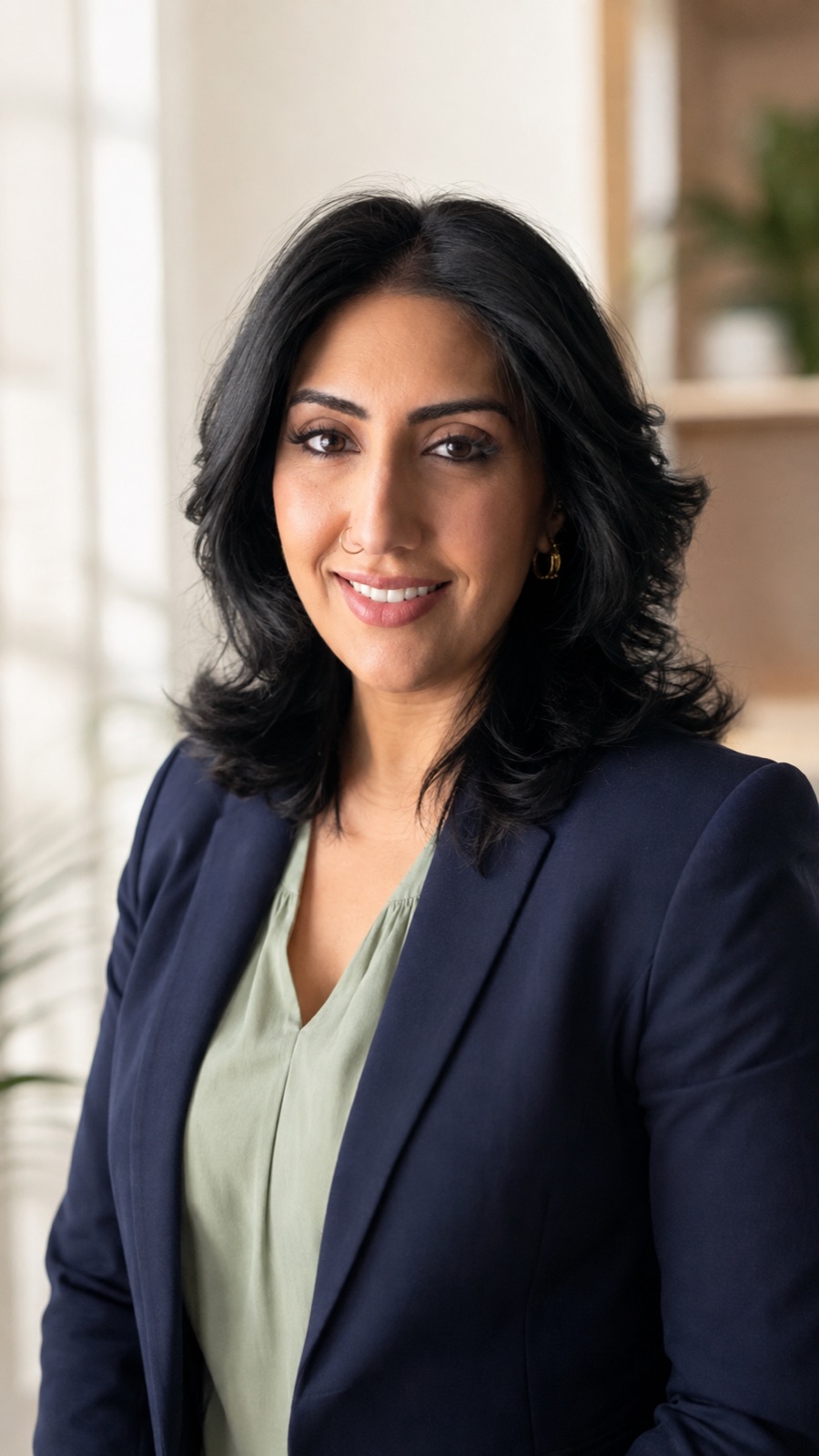
Rubina K. Singh, LCSW, CASAC-2
Rubina has spent more than fifteen years in mental health. She holds a BSW from Rutgers, an MSW from Capella and is completing her doctorate in social work. She is a Licensed Clinical Social Worker in New York, a CASAC Level 2 addiction counselor, and the author of Stop Being Okay. She grew up between cultures, and she speaks English, Urdu, Hindi and Punjabi.
Questions people ask
Can the whole session be in Urdu or Hindi?
Yes. Sessions can be entirely in Urdu, Hindi, Punjabi or English, or any combination. Many clients mix languages naturally.
My Urdu isn't very good — will that be awkward?
Not at all. Plenty of people understand their family language better than they speak it. Use whatever words you have, and fill in with English whenever you need to.
Can my mother join a session and speak in Punjabi?
Yes. Family sessions where each person speaks their own language are welcome. It often helps everyone feel heard without anyone having to translate.
Do you offer therapy in Bengali, Gujarati or Tamil?
No. Rubina offers sessions in English, Urdu, Hindi and Punjabi. Clients from many other language backgrounds work with her in English and find the cultural understanding just as valuable.
Is online therapy in Urdu available outside New York City?
Yes. Rubina is licensed in New York, so anyone living in New York State can have online sessions with her in Urdu, Hindi, Punjabi or English.
Last reviewed October 13, 2026 by Rubina K. Singh, LCSW
Reaching out is the whole first step.
You don't need the right words. Leave your name and number, or book a session directly — Rubina's team replies personally, usually within 24 to 48 hours.
Book a session →In a crisis? Call or text 988, or call 911. This site is not an emergency service.