

Therapist in Staten Island — South Asian, Couples & Anxiety
Finding a therapist in Staten Island who understands South Asian and immigrant families can feel close to impossible, which is why many people on the island end up searching the whole city.
Rubina works with clients from St. George, Tompkinsville, New Dorp and across the island. Because her sessions run online as well as in person in New York City, the ferry and the Verrazzano stop being part of the decision. You can meet from your living room in Tompkinsville or from a quiet corner at work, and still get a therapist who knows what your family means to you.
- LCSW
- CASAC-2
- Author of Stop Being Okay
- Urdu · Hindi · Punjabi
- In person in NYC
- Online across New York
Living on the island, carrying the whole family
Staten Island's South Asian and Muslim communities have grown steadily, especially on the North Shore around St. George and Tompkinsville, and in pockets further south near New Dorp. Clients here often describe a particular kind of loneliness: close to Manhattan on a map, yet far from the larger desi neighborhoods in Queens where everything — groceries, mosques, temples, language — is around the corner.
That distance can be quietly freeing and quietly isolating at the same time. You may be the only family on your street that fasts in Ramadan or celebrates Diwali. Your children may feel more at home than you do. And the people you would normally lean on may be a long ride, or a long flight, away.
You might be reaching out because
Staten Island clients tend to arrive with one of these three on their mind:
- You feel stretched thin between a long commute, a demanding job and a household that depends on you, and the tiredness has turned into something heavier. Burnout and depression are both worth talking about before they get worse.
- Your relationship has gone quiet. You still share a home and children, but conversations are only about logistics. Couples counseling can help you find each other again.
- You worry constantly — about your parents back home, your children's future, money, health — and cannot switch it off at night. Anxiety therapy gives you tools and a place to put it down.
None of these mean something is wrong with you. They mean you have been coping alone for a long time.
How Rubina works with island clients
Rubina listens before she suggests anything. In the first session she wants to understand your family, your history and what you hope will change. After that, the work might include practical skills from cognitive behavioral therapy, conversations about the patterns you learned growing up, or couples work that helps both of you stop defending and start listening.
Progress rarely looks dramatic at first. Clients often notice small things before big ones: sleeping a little better, saying no to one request without a week of guilt, having one honest conversation with a partner that does not end in silence. Those small shifts add up. Rubina will check in with you regularly about whether the work feels useful, and adjust it if it does not.
She is a Licensed Clinical Social Worker in New York and a CASAC-2 counselor, so if alcohol, pills or another substance is part of the picture — yours or a loved one's — that can be addressed without shame. She is also the author of Stop Being Okay, a book for people who have spent years pretending they are fine.
Related pages
- South Asian therapist →A desi therapist who will not need things explained.
- Therapy for South Asian women →For the daughter, wife and mother who holds it all.
- Cultural identity therapy →Sorting out which values are truly yours.
- Couples counseling →For partners who still care but keep missing each other.
- Anxiety therapy →When worry runs the house.
- Grief therapy →For losses near and far, including parents abroad.
What sessions look like
Staten Island clients choose between online sessions over secure video and in-person sessions in New York City. Most pick online because it fits around school runs and work shifts. Individual sessions last 50 minutes and couples sessions an hour.
Sessions can be in English, Urdu, Hindi or Punjabi. The practice is private pay and does not bill insurance; you can see current fees on the fees page, and book directly on the booking page.
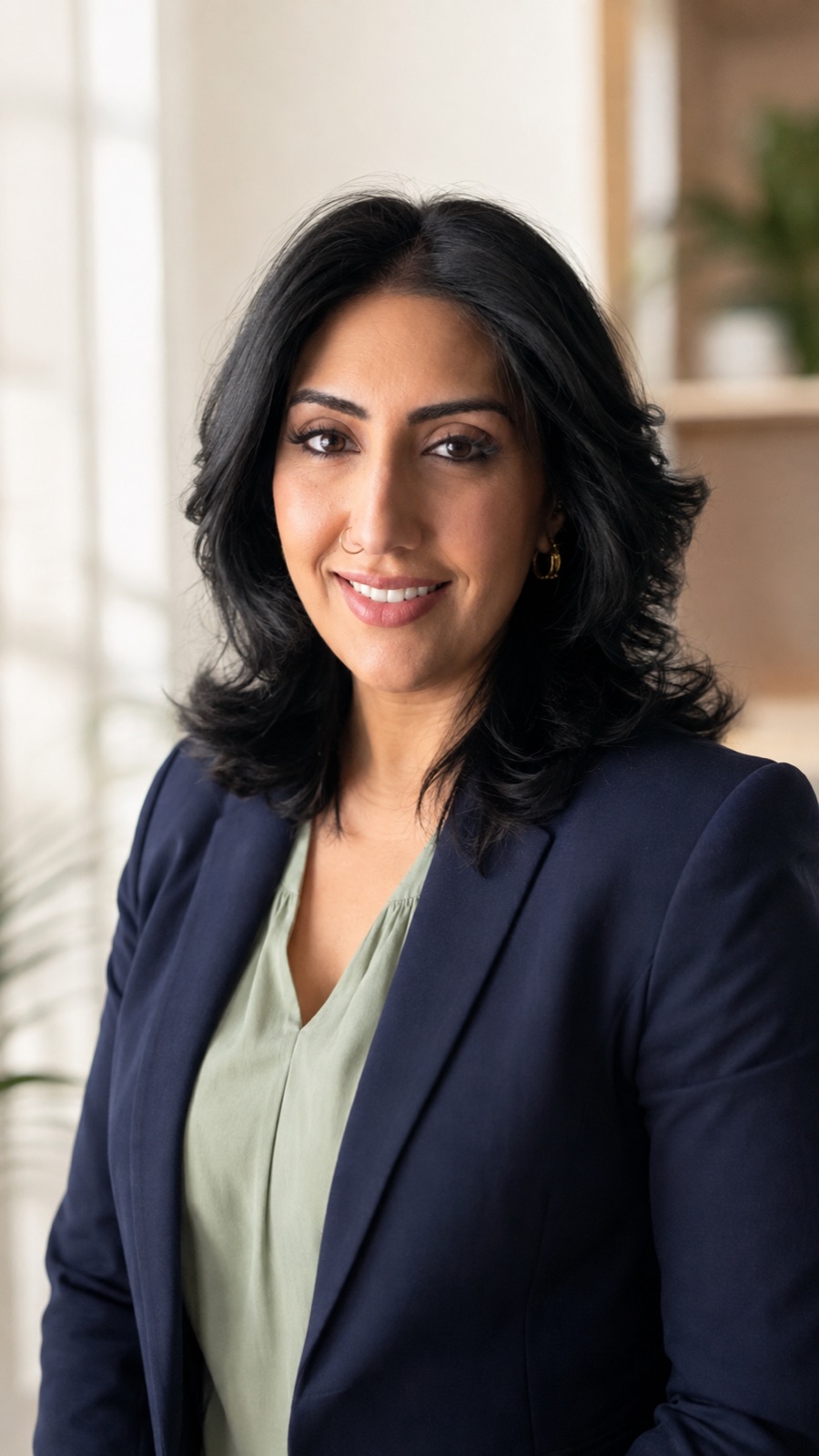
Rubina K. Singh, LCSW, CASAC-2
Rubina has spent more than fifteen years in mental health. She holds a BSW from Rutgers, an MSW from Capella and is completing her doctorate in social work. She is a Licensed Clinical Social Worker in New York, a CASAC Level 2 addiction counselor, and the author of Stop Being Okay. She grew up between cultures, and she speaks English, Urdu, Hindi and Punjabi.
Questions people ask
Do I have to travel off the island for therapy?
No. You can do every session online from Staten Island. In-person sessions in New York City are an option if you prefer to meet face to face.
Can my partner and I join from different places?
Yes. For couples sessions, partners can join the same video call from different locations, as long as both of you are in New York State and somewhere private.
Do you work with people who are not South Asian?
Yes. Rubina works with clients of every background. Her particular depth is with South Asian, Muslim and immigrant families, and everyone is welcome.
Last reviewed October 13, 2026 by Rubina K. Singh, LCSW
Reaching out is the whole first step.
You don't need the right words. Leave your name and number, or book a session directly — Rubina's team replies personally, usually within 24 to 48 hours.
Book a session →In a crisis? Call or text 988, or call 911. This site is not an emergency service.