

Family therapy in NYC for parents, adult children and siblings
Family therapy in NYC is for families who love each other and still cannot seem to talk without someone leaving the room, going quiet for a week or reopening an old wound.
Sometimes it is a grown daughter and her mother who cannot discuss marriage without tears. Sometimes it is siblings dividing the care of an aging father. Sometimes it is parents who sacrificed everything for children who now live very different lives, and nobody knows how to say "I am hurt" or "I am proud of you" in a way the other can hear. Rubina creates a calm, structured space where every person gets to speak and every person gets to be heard.
- LCSW
- CASAC-2
- Author of Stop Being Okay
- Urdu · Hindi · Punjabi
- In person in NYC
- Online across New York
When families come to therapy
Rubina works mainly with adult families — grown children with their parents, adult siblings, and multigenerational households. Common reasons include:
- Generational conflict between immigrant parents and children raised in America
- Disagreements about marriage, partners, careers or where someone should live
- Caring for an aging or ill parent, and who carries the load
- Grief after a death in the family, and different ways of mourning
- A family member's drinking, drug use or gambling — see addiction and recovery support
- Estrangement, and whether or how to reconnect
- A divorce or remarriage reshaping the family
- Old hurts from childhood that still shape every holiday
Across generations and cultures
Many of the families Rubina sees are South Asian or come from other immigrant backgrounds. In these families, conflict is often between two good intentions. Parents want safety, respect and continuity. Children want freedom, honesty and to be seen as adults. Both are right, and both are exhausted.
Rubina understands the weight of duty, sacrifice and izzat (honor) in these homes, and she will not ask anyone to abandon their values. Instead she helps each generation understand the world the other grew up in. A father who left everything behind at twenty-five and a daughter who has never had to are living different stories. Once each can see the other's story, the arguments usually soften. For adult children carrying this alone, therapy for children of immigrants can be a helpful companion to family sessions.
How family sessions work
Rubina uses a family systems approach. That means she looks at the patterns between people rather than labeling one person as the problem. The child who rebels, the parent who controls and the sibling who keeps the peace are often all playing roles that the family needs in some way. When those roles become visible, they can change.
Sessions have clear ground rules so that no one is ambushed. Rubina may begin with one or two individual meetings to understand each person's view before bringing everyone together. She keeps conversations paced so that difficult topics are opened carefully, and she makes sure quieter family members are not drowned out by louder ones. Sessions can move between English, Urdu, Hindi and Punjabi, which often helps parents speak more freely.
When not everyone will come
Often one family member is unwilling to attend. That does not stop the work. Rubina can see the people who are willing, and change in one part of a family system tends to ripple through the rest. Individual therapy focused on family relationships is also an option, particularly if you are the one who has always held everyone together.
Couples inside the family
If the conflict is mainly between spouses, or between a couple and one partner's parents, couples counseling may be a better place to start. Rubina will help you decide which format fits.
What sessions look like
Family sessions last one hour. They can take place in person in New York City or online across New York State, and online sessions make it possible for relatives in different towns, or even a parent upstate and a sibling in Brooklyn, to join from separate screens.
Rubina usually begins by meeting with the person who reached out, then invites other family members in. Most families come weekly or every other week for a period, then space sessions out. Family therapy is $300 per hour, private pay; details are on the fees page.
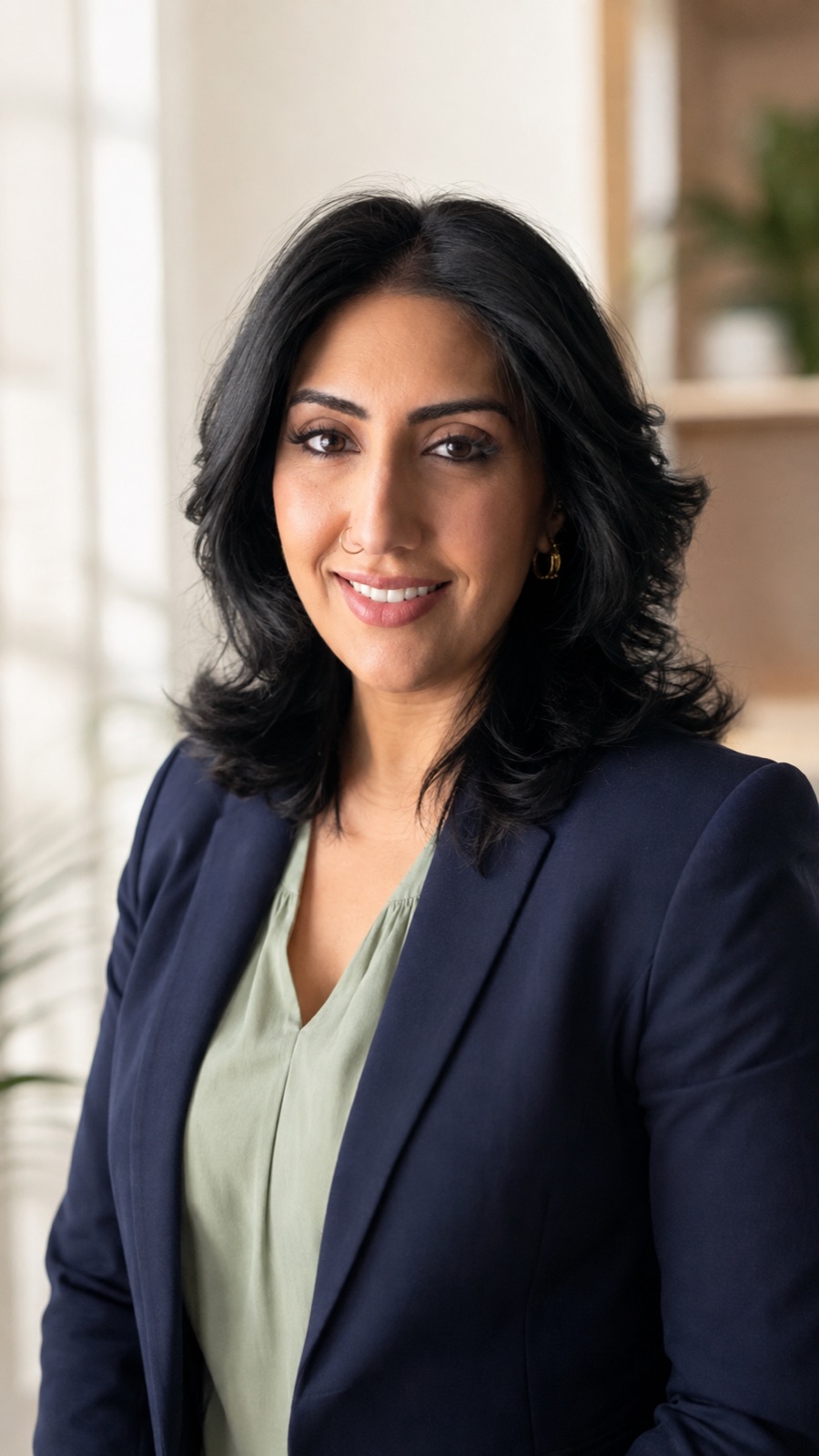
Rubina K. Singh, LCSW, CASAC-2
Rubina has spent more than fifteen years in mental health. She holds a BSW from Rutgers, an MSW from Capella and is completing her doctorate in social work. She is a Licensed Clinical Social Worker in New York, a CASAC Level 2 addiction counselor, and the author of Stop Being Okay. She grew up between cultures, and she speaks English, Urdu, Hindi and Punjabi.
Questions people ask
Do you do family therapy with children?
Rubina's family work focuses mainly on adult families and teens with their parents. Children's therapy sessions are also offered; ask when you reach out so she can tell you what fits your family.
My parents speak limited English. Can they still take part?
Yes. Rubina speaks Urdu, Hindi and Punjabi, and sessions can move between languages so parents can express themselves fully.
What if my parents think therapy is shameful?
That is common. Some families start with a single conversation framed as help for the family rather than therapy for anyone. Rubina is used to working gently with hesitant parents.
Can family members join online from different places?
Yes, as long as each person is in New York State at the time of the session. Many families meet over secure video with members in different towns.
Will you take sides?
No. Rubina's role is to help each person be heard and to look at the patterns between you, not to decide who is to blame.
What family counseling services do you offer?
Family therapy sessions of an hour, in person in New York City or online across New York State, for adult children and parents, siblings, couples with in-laws, and families coping with addiction, illness or a loss. The first step is usually a conversation with the person who reached out, to decide who should come and when.
Last reviewed October 13, 2026 by Rubina K. Singh, LCSW
Reaching out is the whole first step.
You don't need the right words. Leave your name and number, or book a session directly — Rubina's team replies personally, usually within 24 to 48 hours.
Book a session →In a crisis? Call or text 988, or call 911. This site is not an emergency service.