

A South Asian therapist in NYC who already understands the culture
If you have been looking for a South Asian therapist in NYC, it is probably because you are tired of spending the first three sessions explaining your family before anyone can help you.
You shouldn't have to explain why you can't just "set a boundary" with your mother-in-law, why your parents' sacrifice sits on your chest, or why the word therapy still feels like something you have to hide. Rubina grew up between cultures. She knows the joint family, the WhatsApp group, the rishta conversations and the quiet rule that problems stay inside the house. With her, you can start where you actually are.
- LCSW
- CASAC-2
- Author of Stop Being Okay
- Urdu · Hindi · Punjabi
- In person in NYC
- Online across New York
Why a desi therapist can make the difference
A good therapist of any background can help you. But many South Asian clients describe the same experience with therapists who don't share the context: the advice is reasonable and still somehow wrong. "Just tell your parents no." "Why don't you move out?" "Have you considered that your husband's family is the problem?" Those suggestions ignore everything you would lose by following them, and so you stop going.
Working with a desi therapist means that respect for your elders, duty to your family and love for your culture are not treated as symptoms. They are part of who you are, and the work is built around them. The goal is never to make you less South Asian. It is to help you stop disappearing inside everyone else's expectations, while keeping the relationships that matter to you.
It also means the small things land. You can say izzat or sharam and be understood. You can describe an aunty's comment at a wedding and nobody asks why it hurt so much.
What we can work on together
Most people come in with one thing and discover it is connected to three others. These are the threads South Asian clients bring most often:
- Anxiety that looks like high achievement — the constant planning, the inability to rest, the fear of disappointing everyone
- Marriage and in-law stress, whether your marriage was arranged, chosen or somewhere in between
- Being the eldest daughter or the dependable one, and the burnout that comes with it
- Growing up as a child of immigrants — two languages, two sets of rules, and never fully belonging to either
- Grief, including grieving parents or grandparents who live, or died, far away
- Depression that the family calls laziness or "too much thinking"
- Addiction in the family, which almost no one in the community talks about
- Cultural identity — figuring out which values are yours and which ones you are carrying out of fear
Pakistani, Indian, Bangladeshi, Sri Lankan, Nepali, Guyanese and Caribbean desi
"South Asian" covers a lot of people, and Rubina doesn't flatten them into one. A Pakistani family in Jackson Heights, a Gujarati family in Hicksville, a Bangladeshi family in Kensington and an Indo-Guyanese family in Richmond Hill share some things and differ on many others — religion, language, caste, migration story, what is spoken about and what never is.
Rubina works with Hindu, Muslim, Sikh, Christian, Jain and non-religious clients, with first-generation immigrants and with people whose grandparents arrived decades ago. If you are Pakistani or Muslim, or you would rather speak in Urdu, Hindi or Punjabi, there are pages written specifically for you. And if you are not South Asian at all but want a therapist who understands family, culture and pressure, you are welcome here too.
If therapy still feels like a betrayal
Many people arrive with a voice in their head saying that therapy is for people with "real" problems, that talking to a stranger about your family is disloyal, or that you should be grateful for everything you have. That voice usually belongs to someone who loved you and was protecting you the only way they knew how.
You don't have to argue with it before you begin. You can come to therapy and still love your family. You can come without telling anyone. Many clients keep their sessions completely private, and confidentiality is protected by law. What you say in the room stays in the room.
What sessions look like
Sessions are 50 minutes for individuals and an hour for couples and families. Rubina sees clients in person in New York City and online across New York State over a private, secure video link, so you can join from Queens, Long Island, Westchester or anywhere in the state.
The first session is mostly listening. You don't need to prepare or know what to say. Rubina will ask about what brought you in, what you have already tried and what you would like to be different. You can speak in English, Urdu, Hindi or Punjabi, and switch whenever the right word is in another language.
From there, the work is shaped around you. Rubina draws on approaches such as cognitive behavioral therapy (CBT), family systems work, emotionally focused therapy for couples and self-compassion work — always adapted to your culture rather than imported unchanged. You can see fees and payment options here.
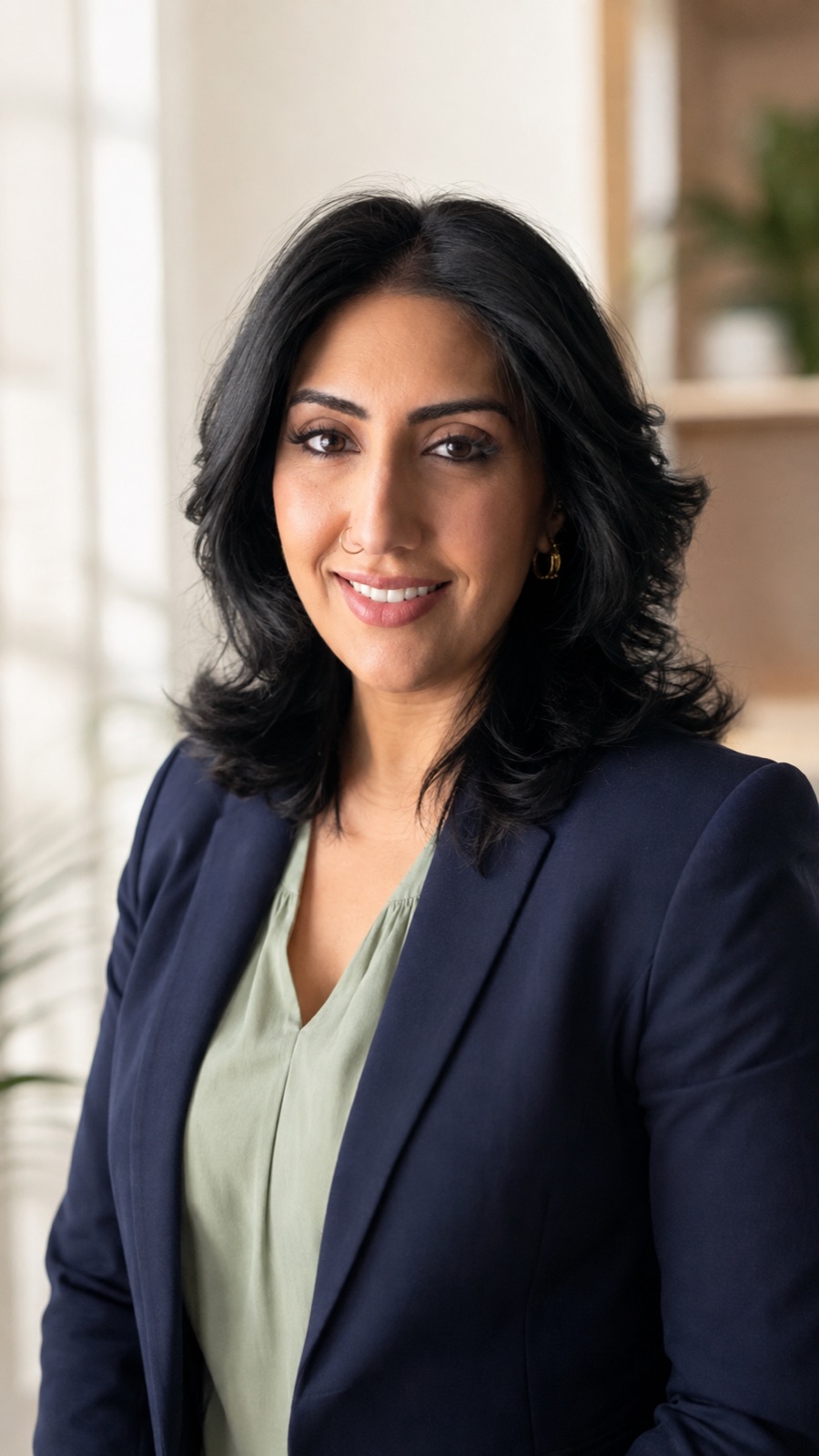
Rubina K. Singh, LCSW, CASAC-2
Rubina has spent more than fifteen years in mental health. She holds a BSW from Rutgers, an MSW from Capella and is completing her doctorate in social work. She is a Licensed Clinical Social Worker in New York, a CASAC Level 2 addiction counselor, and the author of Stop Being Okay. She grew up between cultures, and she speaks English, Urdu, Hindi and Punjabi.
Questions people ask
Will my family find out I am in therapy?
Not from us. Therapy is confidential under law, and Rubina does not contact family members without your written permission. Many clients join online from their car, office or a quiet room, and nobody else knows. The only exceptions are the legal ones every therapist has: a serious risk to your safety or someone else's.
Do I have to be religious, or of a particular religion?
No. Rubina works with Hindu, Muslim, Sikh, Christian and non-religious clients. Faith is part of the conversation only if you want it to be.
Can I speak in Urdu, Hindi or Punjabi during sessions?
Yes. Sessions can be in English, Urdu, Hindi, Punjabi or a mix. Many people switch languages when they reach the things that are hardest to say.
Do you only work with South Asian clients?
No. Rubina works with clients of every background. Her particular depth is with South Asian, Muslim and immigrant-background families, but anyone who wants a culturally aware therapist is welcome.
Is it therapy or coaching?
Rubina is a Licensed Clinical Social Worker, so individual, couples and family sessions are clinical therapy. She also offers life coaching for women for those who want a forward-looking, goal-focused approach instead.
Do you take insurance?
The practice is private pay and does not bill insurance. Current fees, and what that means if you have out-of-network benefits, are on the fees page.
Last reviewed October 13, 2026 by Rubina K. Singh, LCSW
Reaching out is the whole first step.
You don't need the right words. Leave your name and number, or book a session directly — Rubina's team replies personally, usually within 24 to 48 hours.
Book a session →In a crisis? Call or text 988, or call 911. This site is not an emergency service.