

Cultural identity therapy in NYC with a bicultural therapist
Cultural identity therapy in NYC is for the person who has spent years asking which version of themselves is the real one — the one at the family dinner, or the one at the office party.
New York is full of people living between cultures. You might be the child of immigrants, an immigrant yourself, married across cultures, raising children with values your parents don't share, or slowly letting go of a tradition and grieving it at the same time. Rubina is a bicultural therapist who has lived that tension personally. She helps you figure out what you inherited, what you have chosen, and how to build a self that holds both without constant inner conflict.
- LCSW
- CASAC-2
- Author of Stop Being Okay
- Urdu · Hindi · Punjabi
- In person in NYC
- Online across New York
What cultural identity work actually looks like
Identity isn't something you either have or don't have. It is a set of beliefs, habits, loyalties and stories, some of which you chose and many of which you absorbed long before you could question them. Cultural identity therapy slows down and looks at those pieces one by one.
In sessions you might talk about the values your family passed on and how they show up in your marriage, your parenting or your career. You might explore the moments when you feel most like yourself and the moments when you feel like you are performing. You might work through the anger, guilt or grief that comes with changing — or with not changing. There is no correct destination. The goal is a self you can live inside comfortably.
How it shows up for clients
These are composite examples, not real people. They reflect themes that come up often.
The professional who code-switches all day
She is confident and articulate at work, then goes home and becomes quiet and deferential. By the weekend she doesn't recognise herself in either role. Therapy helps her find the parts of her that are constant, and decide which compromises are worth keeping.
The son who chose a different path
He left the career his parents planned for him. They have accepted it, technically, but every visit carries a note of disappointment. He wants to stop feeling like a failure in his own family. Together they work on separating his worth from their approval.
The new mother raising children between cultures
She wants her children to speak her language and know her traditions, but she also wants to raise them differently from how she was raised. Therapy gives her space to decide what to pass on and what to leave behind.
Common threads in cultural identity therapy
- Guilt about moving away from family traditions, religion or expectations
- Feeling like an outsider in both your heritage community and mainstream American life
- Racial stress and discrimination, and the toll of being the only one in the room
- Relationships across cultures, where you and your partner keep bumping into different assumptions — see intercultural couples therapy
- Parenting decisions about language, faith and discipline
- Immigration, relocation and the losses that come with leaving home
- Growing up as one of the children of immigrants who served as translator and bridge for the whole family
Why a bicultural therapist helps
When a therapist doesn't share or understand your cultural context, a lot of energy goes into explaining. Why the family expects you to visit every weekend. Why a remark about your weight from your aunt still stings at thirty-five. Why moving out before marriage is a big deal. By the time you have explained, the session is almost over.
Rubina grew up between cultures and has worked with South Asian and immigrant-background clients for more than fifteen years. She knows that cultural values are not simply "traditional" versus "modern," and she won't push you toward either side. Clients of every background are welcome: South Asian, Caribbean, Latino, East Asian, Middle Eastern, African, mixed heritage and white Americans navigating a partner's culture all bring identity questions to therapy.
If you are South Asian specifically, you might also like to read about her work as a South Asian therapist in NYC.
Approaches Rubina uses
Rubina's way of working is person-centered first — she listens closely and doesn't impose a framework. From there she might draw on family systems therapy to trace patterns across generations, acceptance and commitment therapy (ACT) to help you act on your own values when guilt is loud, and self-compassion focused work for the inner critic that formed when you were always measured against cousins and community expectations.
Identity work often overlaps with other concerns. Some clients come for anxiety or a major life transition and find that cultural identity is underneath it all.
What sessions look like
Sessions are 50 minutes. Rubina sees clients in person in New York City and online across New York State over secure video, so you can join from home, work or wherever you have privacy.
You can speak in English, Urdu, Hindi or Punjabi, and switch whenever it helps. Early sessions focus on your story — where you grew up, what home was like, what you were taught about who to be. Later sessions focus on what you want now.
There is no fixed number of sessions. Some clients work on identity for a few months during a transition; others make it a longer-term part of their growth. Fees are listed on the fees and insurance page.
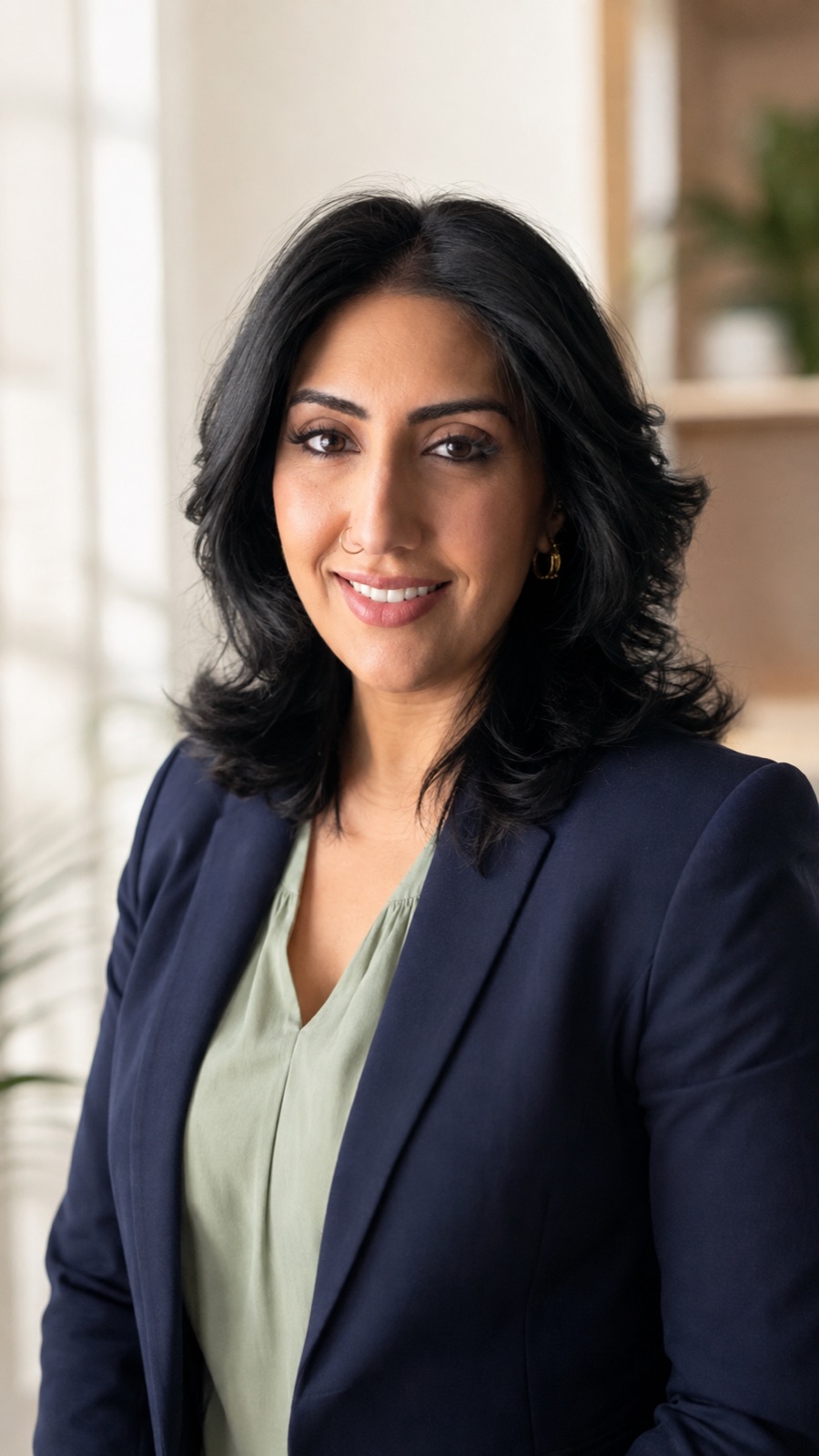
Rubina K. Singh, LCSW, CASAC-2
Rubina has spent more than fifteen years in mental health. She holds a BSW from Rutgers, an MSW from Capella and is completing her doctorate in social work. She is a Licensed Clinical Social Worker in New York, a CASAC Level 2 addiction counselor, and the author of Stop Being Okay. She grew up between cultures, and she speaks English, Urdu, Hindi and Punjabi.
Questions people ask
What is cultural identity therapy?
It is therapy that focuses on how your culture, heritage, migration story and community shape your sense of self, your relationships and your choices — and helps you build an identity that feels like yours.
Do I need to be South Asian to work with Rubina on this?
No. Rubina's own background is South Asian, but she works with clients of every heritage who are navigating life between cultures.
Will therapy push me to reject my culture?
No. The goal is never to move you away from your culture or toward it. It is to help you choose consciously, so the values you live by are ones you actually hold.
Can cultural identity therapy help with a mixed or interfaith relationship?
Yes. Individual identity work often makes cross-cultural relationships easier. Couples can also work together through intercultural couples therapy.
Is this the same as life coaching?
No. Cultural identity therapy is clinical work with a licensed clinical social worker. If you want a more goal-focused approach, Rubina also offers life coaching for women.
Last reviewed October 13, 2026 by Rubina K. Singh, LCSW
Reaching out is the whole first step.
You don't need the right words. Leave your name and number, or book a session directly — Rubina's team replies personally, usually within 24 to 48 hours.
Book a session →In a crisis? Call or text 988, or call 911. This site is not an emergency service.