

Therapist in Queens — South Asian, Couples & Anxiety
If you live in Queens and you are looking for a therapist who understands where you come from, you are probably searching from a home where three generations share a kitchen and nobody has ever said the word therapy out loud.
Rubina K. Singh, LCSW, works with many clients from Queens — Pakistani, Indian, Bangladeshi, Nepali and Indo-Guyanese families, Muslims, Hindus, Sikhs and Christians, people who arrived last year and people whose parents opened a shop on 74th Street decades ago. You can talk to her about your family without translating your whole life first.
- LCSW
- CASAC-2
- Author of Stop Being Okay
- Urdu · Hindi · Punjabi
- In person in NYC
- Online across New York
Queens is not one community, and therapy here shouldn't pretend it is
Walk from the sari shops and sweet stores of Jackson Heights to the Liberty Avenue stretch of Richmond Hill and you cross several worlds. Jackson Heights holds Pakistani, Indian, Bangladeshi and Nepali families side by side, often in the same building. Richmond Hill and South Ozone Park are home to a large Indo-Caribbean community with roots in Guyana and Trinidad, whose story of migration and family is its own. Further east, Floral Park and Bellerose feel almost suburban, with Punjabi and Malayali families who moved out for more space and found the same expectations followed them.
Jamaica, Astoria, Forest Hills and Flushing add more layers again — Bangladeshi blocks near Hillside Avenue, young professionals renting in Astoria, families who have owned homes in Forest Hills for a generation. Rubina listens for which of these worlds you live in before she assumes anything about what your family expects of you.
What Queens clients bring most often
Every story is different, but three threads come up again and again with clients from the borough:
- Living with in-laws or in a joint family, and losing yourself inside everyone's needs. Marriage strain often starts here, which is why South Asian couples therapy is one of the most requested services from Queens.
- Anxiety about what the community will say. In a neighborhood where your aunt's friend runs the pharmacy and everyone attends the same weddings, privacy can feel impossible, and that pressure shows up as anxiety, sleeplessness and constant worry.
- Being the child who holds it together — translating for parents, managing the household, sending money home, and never being allowed to be tired. Many of these clients are children of immigrants in their twenties and thirties who are only now noticing how much they carry.
Pages that might speak to you
Depending on what brought you here, these pages go deeper:
- Pakistani therapist in NYC →For Pakistani clients who want Urdu, privacy and no explaining.
- Muslim therapist in NYC →Therapy that respects your faith and your family.
- Urdu and Hindi speaking therapist →For when the right words are in another language.
- Couples therapy in NYC →For marriages that still have love but have lost the language.
- Depression therapy →When the family calls it laziness and you know it is more.
- Grief therapy →Including grieving parents and grandparents far away.
Keeping it private in a borough where everyone knows someone
One of the most common worries from Queens clients is simple: what if someone sees me? Online sessions solve most of it. Clients join from a parked car, a lunch break at work, a bedroom with the door closed or a friend's apartment. Nobody in the building needs to know where you are going on a Tuesday evening, because you aren't going anywhere.
Confidentiality is protected by law. Rubina does not contact your family, your mosque, mandir or gurdwara, or anyone else without your written permission. If you want your spouse or a parent involved later, that is your decision, made when you are ready.
What sessions look like
Most clients from Queens meet with Rubina online over secure video, which means no traffic on the Van Wyck and no explaining to anyone where you are headed. In-person sessions in New York City are also available — ask about them when you reach out.
Individual sessions are 50 minutes, couples and family sessions an hour. You can speak in English, Urdu, Hindi or Punjabi, or move between them. The first session is mostly listening, and you don't need to prepare anything. Current rates are on the fees page.
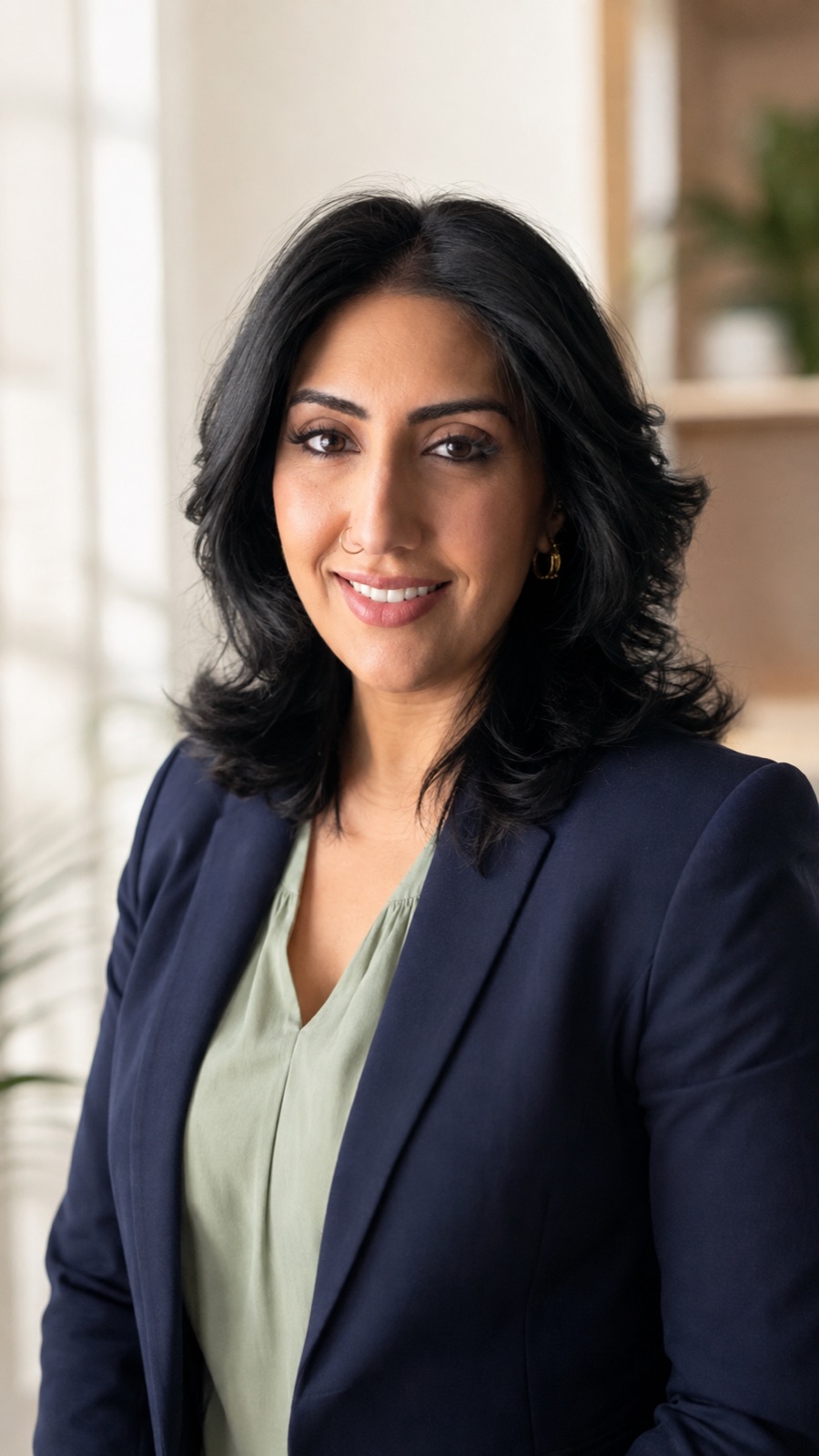
Rubina K. Singh, LCSW, CASAC-2
Rubina has spent more than fifteen years in mental health. She holds a BSW from Rutgers, an MSW from Capella and is completing her doctorate in social work. She is a Licensed Clinical Social Worker in New York, a CASAC Level 2 addiction counselor, and the author of Stop Being Okay. She grew up between cultures, and she speaks English, Urdu, Hindi and Punjabi.
Questions people ask
Do you see clients from Jackson Heights or Richmond Hill in person?
Sessions are available online across New York State and in person in New York City. Many Queens clients choose video because it is more private and fits around work and family. Ask about in-person options when you contact the practice.
Can my mother or mother-in-law join a session?
Yes, if you want that. Family sessions can include parents or in-laws, and Rubina can work in Urdu, Hindi or Punjabi so older relatives feel comfortable. Many people start alone first and invite family later, or never.
I'm Indo-Guyanese. Is this still for me?
Yes. Rubina works with Indo-Caribbean clients as well as those from South Asia. The family pressures overlap in some ways and differ in others, and she will ask rather than assume.
Do you take insurance?
The practice is private pay and does not bill insurance. Fees and payment options are listed on the fees and insurance page.
Last reviewed October 13, 2026 by Rubina K. Singh, LCSW
Reaching out is the whole first step.
You don't need the right words. Leave your name and number, or book a session directly — Rubina's team replies personally, usually within 24 to 48 hours.
Book a session →In a crisis? Call or text 988, or call 911. This site is not an emergency service.