

Therapy that respects your faith and your family — a Muslim therapist NYC clients trust
Many people searching for a Muslim therapist in NYC are really asking one thing: will this person respect my faith, or will they quietly treat it as part of the problem?
That fear is understandable. Muslim clients often describe therapists who suggested taking off the hijab to feel freer, who saw prayer as avoidance, or who assumed that a religious marriage must be an unhappy one. Rubina works differently. She approaches faith as a source of meaning, strength and community — and sometimes, of very real pressure — and she lets you decide how much of it belongs in the room.
- LCSW
- CASAC-2
- Author of Stop Being Okay
- Urdu · Hindi · Punjabi
- In person in NYC
- Online across New York
An honest note about faith
Rubina works with clients of every faith and of none, including many Muslim individuals, couples and families from Pakistani, Bangladeshi, Indian, Arab, African and convert backgrounds. She grew up in a South Asian context where Islam, Hinduism and Sikhism sat side by side, and she understands the rhythms of Ramadan, Eid, Jummah and family obligations around them.
She is not a religious scholar and does not give fatwas or religious rulings. If you want guidance on a point of fiqh, your imam or a scholar you trust is the right person. What Rubina offers is a space where your faith is respected, where you will not be asked to justify it, and where you can explore your emotions without feeling you have to choose between your deen and your mental health.
When faith and mental health feel like they are in conflict
Some Muslim clients have heard, directly or indirectly, that anxiety or depression means weak iman — that if you prayed more or trusted Allah more, you wouldn't feel this way. That message can add shame on top of pain. Many scholars and Muslim mental health organisations reject it, and Rubina does too. Feeling low is not a spiritual failure.
Others carry harder experiences: rigid or frightening religious teaching in childhood, judgment from a community when a marriage ended, or doubts they feel unable to share with anyone. You can bring those experiences here without being labelled. The goal is never to move you closer to or further from religion. It is to help you feel more at peace with yourself.
What Muslim clients often come in with
- Marriage difficulties, including adjusting after a nikah to a spouse you didn't know well, or a marriage where communication has broken down. South Asian couples therapy and intercultural couples therapy are both available.
- In-law tension and the expectations placed on a daughter-in-law, especially in a joint family
- Anxiety for women who wear hijab and face stares, comments or discrimination at work or on the subway
- Pressure around marriage — when to marry, whom to marry, and why you are still single
- Divorce or khula, and the stigma that can follow a woman afterwards
- Grief and loss, including the weight of making sense of death through faith. See grief therapy.
- Family members struggling with alcohol or drugs, a subject surrounded by intense shame in many Muslim communities. Rubina's CASAC-2 training is directly relevant; read about addiction and recovery support.
For Muslim women, and for hijabi women in particular
Muslim women in New York are often doing several jobs at once: building careers, raising children, caring for parents, holding a household's reputation, and quietly absorbing comments about how they dress or whether they are "too modern" or "too religious." Rubina sees many women who feel they cannot win either way.
In sessions you will not be asked to explain why you cover, or why you choose not to. You can talk about modesty, marriage, intimacy and boundaries in the language that feels right to you. Women who want a wider circle might also look at the group program for South Asian women, or the page on therapy for South Asian women.
Working with Muslim couples
Rubina works with married Muslim couples and with couples preparing for marriage. Common themes include different expectations about roles in the home, how much say each family has, money, intimacy after years of silence about it, and differences in religious practice between partners. She does not take sides, and she will not push either of you to abandon your values.
Couples preparing for nikah can benefit from premarital counseling, which gives you a chance to talk about the hard questions — children, finances, where you will live, how you handle conflict — before they become fights.
What sessions look like
Sessions are 50 minutes for individuals and an hour for couples and families. Rubina sees clients in person in New York City and online across New York State. Online sessions are easy to fit around prayer times, work and family, and can be scheduled around Ramadan if your energy and routine change.
You can speak in English, Urdu, Hindi or Punjabi. If you would like to pause a session for salah, just say so.
Rubina draws on approaches such as cognitive behavioral therapy (CBT), acceptance and commitment therapy (ACT) and emotionally focused couples therapy, adapted to fit your values. Information on fees is on the fees and insurance page.
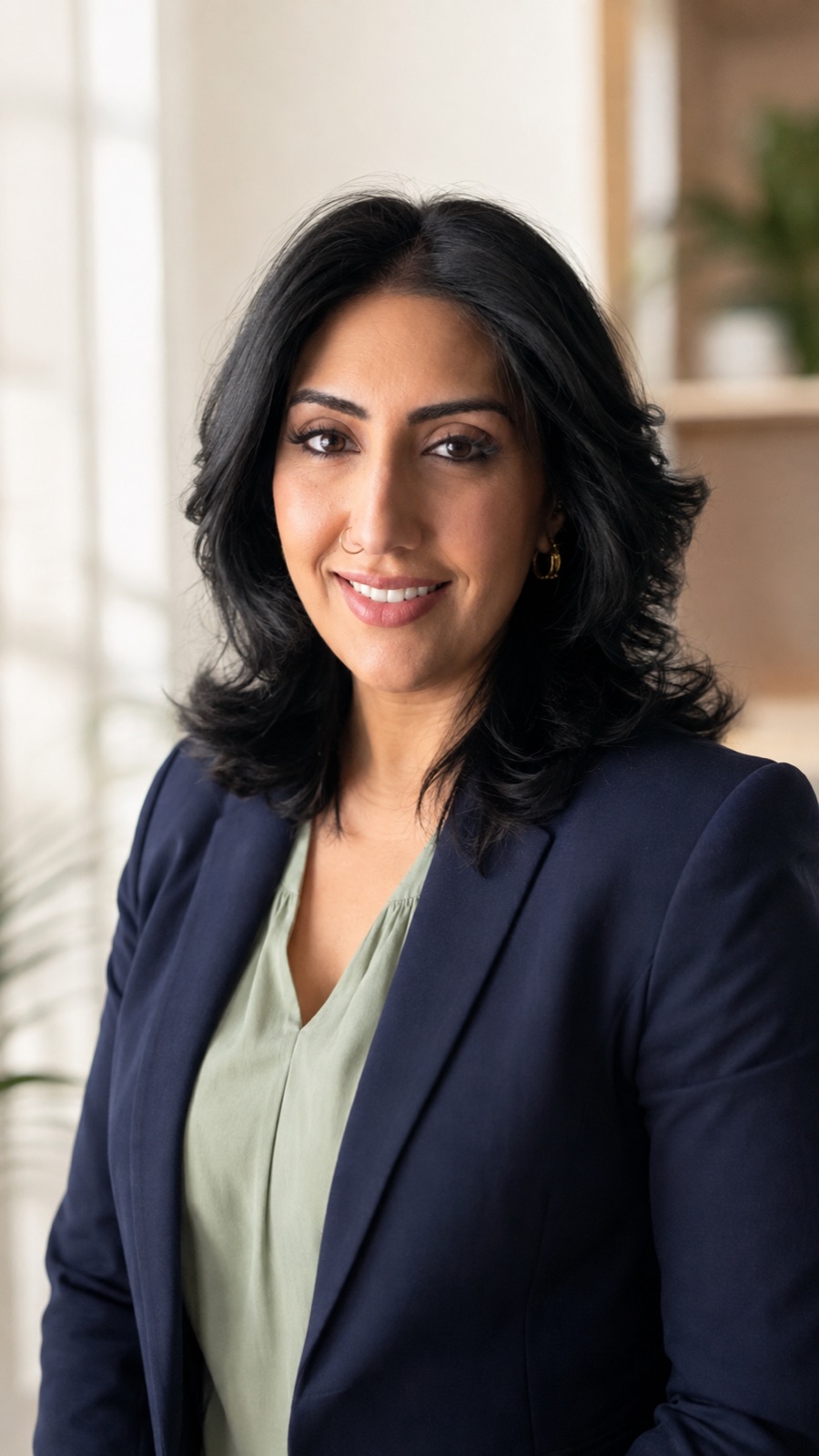
Rubina K. Singh, LCSW, CASAC-2
Rubina has spent more than fifteen years in mental health. She holds a BSW from Rutgers, an MSW from Capella and is completing her doctorate in social work. She is a Licensed Clinical Social Worker in New York, a CASAC Level 2 addiction counselor, and the author of Stop Being Okay. She grew up between cultures, and she speaks English, Urdu, Hindi and Punjabi.
Questions people ask
Is Rubina Muslim?
Rubina works with clients of all faiths and doesn't make her own beliefs the focus of anyone's therapy. What matters is that she understands Muslim family and community life and treats your faith with respect.
Will you tell me my religion is the problem?
No. Your faith is treated as part of who you are. If religious experiences have caused you pain, you can explore that too — but the direction is always yours to choose.
Do you work with people who aren't very religious, or who are questioning?
Yes. Some clients are practising, some are not, and some are somewhere in between or questioning. All of them are welcome, and nobody is judged for where they stand.
Can my husband and I come together?
Yes. Rubina works with Muslim couples, both married and preparing for marriage. If your husband is not ready to come, you can begin individually.
Will the community find out?
No. Sessions are confidential under law, and Rubina does not share anything with family, masjid or community members without your written consent, except for the narrow legal safety exceptions all therapists follow.
Last reviewed October 13, 2026 by Rubina K. Singh, LCSW
Reaching out is the whole first step.
You don't need the right words. Leave your name and number, or book a session directly — Rubina's team replies personally, usually within 24 to 48 hours.
Book a session →In a crisis? Call or text 988, or call 911. This site is not an emergency service.